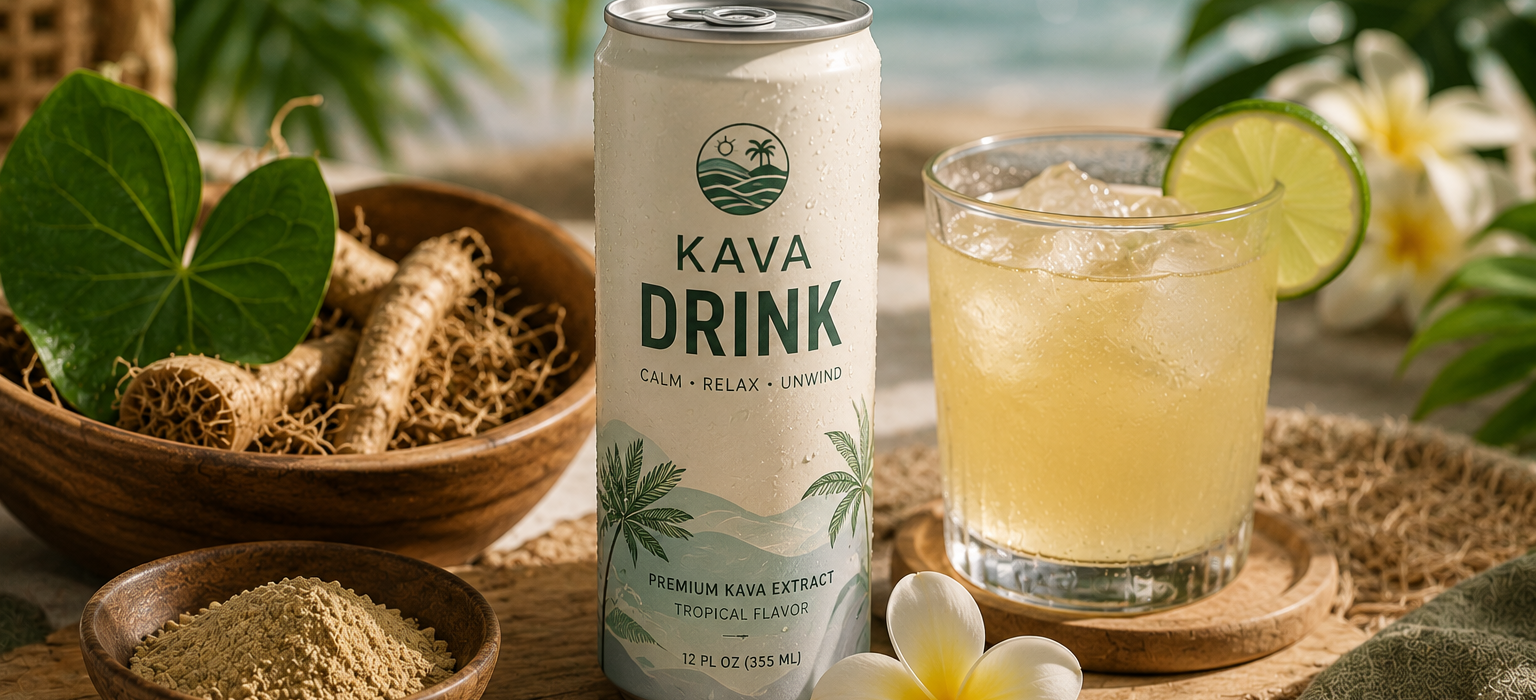
Kava Drinks Guide: From Traditional Root Preparation to Modern Beverages

I still remember the first time someone handed me a bowl of Kava and said, “Bula, drink it in one go.” I didn’t know the etiquette, I didn’t know what my tongue was about to feel (that strange, pleasant numbness), and I definitely didn’t know I was about to fall down a three-year rabbit hole researching, tasting, and writing about this plant. If you’re here, you’ve probably had a similar moment — a friend’s Kava bar recommendation, a can of something “functional” at Whole Foods, or just a late-night search for an alcohol alternative that doesn’t leave you foggy the next day.
So let’s slow down and actually go through it properly: what Kava drinks are, where they come from, how they’re made, the old way and the new way and what’s actually known (and not known) about how they affect you.
What Is a Kava Drink?
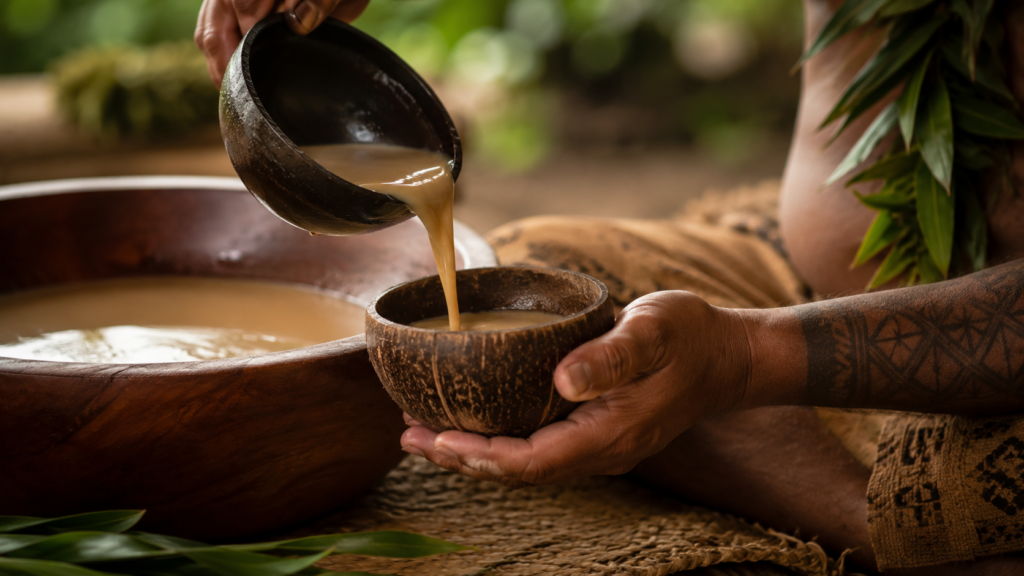
“Kava” refers to both the plant and the beverage made from it. Botanically, Kava is Piper methysticum, a shrub in the pepper family, and the name itself comes from a Greek phrase meaning roughly “intoxicating pepper.”
It’s native to islands across the South Pacific, and it’s the root of the plant, not the leaves or stem, that holds the compounds people are actually after: kavalactones.
A “Kava drink,” then, is any beverage made by extracting kavalactones from the ground or pounded root, traditionally using nothing but water.
You’ll also see this drink called Kava Kava, or referred to by local terms like ‘awa in Hawaii or yaqona in Fiji. In the U.S., it’s most often just “Kava,” and the places that serve it are called Kava bars.
How Are Kava Drinks Made?
If you have ever wondered how kava goes from a traditional plant root to the beverage you see today, the answer depends on the type of kava drink you are looking at.
For centuries, kava has been prepared using simple traditional methods that focus on extracting the natural compounds from the kava root. Modern kava beverages follow the same foundation but use updated techniques to create convenient formats like ready-to-drink cans, shots, and mixes.
Let’s look at both approaches.
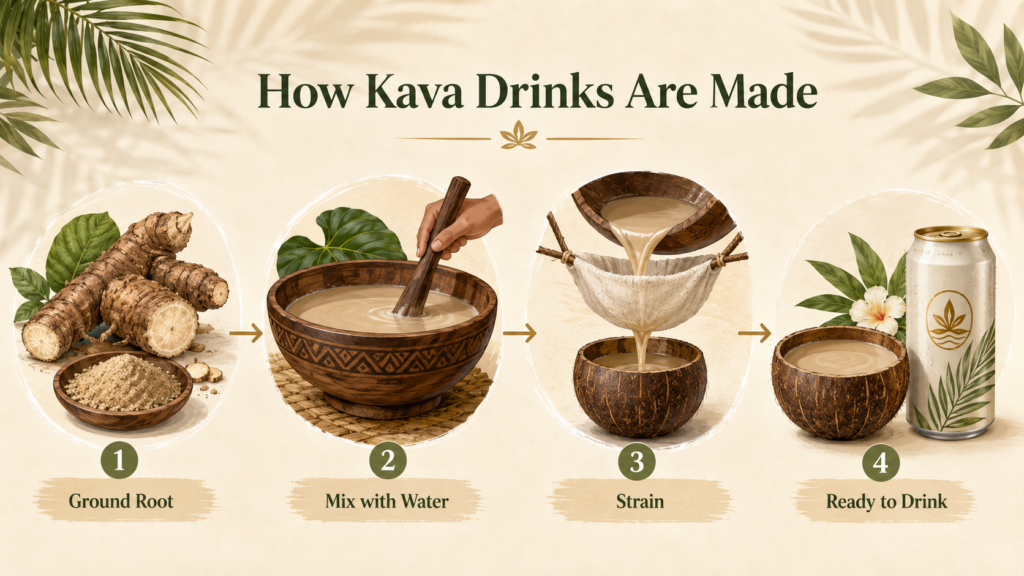
Traditional Kava Preparation
Traditional kava preparation is deeply connected to Pacific Island culture and has been practiced for generations. The process is simple, but every step plays an important role.
- Ground kava root: The process starts with dried kava root, which is cleaned and ground into a powder or pulp. Traditionally, this was done by hand to prepare the root for extraction.
- Mixed with water: The ground kava is then combined with water and worked together to release the naturally occurring compounds found within the root.
- Strained before serving: Once the mixture is prepared, it is filtered through a cloth, mesh, or natural strainer to separate the liquid from the remaining plant material. The result is the traditional kava beverage.
Modern Kava Beverage Production
Today, kava has entered the growing functional beverage space with formats designed for modern lifestyles. While the foundation still comes from kava root, the production process looks different from traditional preparation.
- Kava extracts: Many modern kava drinks begin with processed kava extracts rather than freshly prepared root.
- Beverage formulation: Manufacturers combine kava extracts with other ingredients to create a finished beverage.
- Flavoring for a modern audience: Traditional kava is known for its distinctive earthy character. Modern kava beverages often include flavors like fruit, herbs, or other botanical notes.
- Carbonation and ready-to-drink formats: Many newer kava beverages use carbonation and convenient packaging, turning kava into formats such as sparkling drinks, canned beverages, and portable shots.
What Are The Different Types Of Kava Drinks?
Here are some of the most common types of Kava drinks:
- Traditional Kava Grog: The original style of Kava made by mixing ground Kava root with water and straining it before serving.
- Heady Kava: A lighter Kava variety often associated with a more social and uplifting style of drinking.
- Heavy Kava: A richer Kava style traditionally enjoyed for its deeper, more relaxing character.
- Balanced Kava: A middle-ground option that combines qualities commonly associated with both heady and heavy varieties.
- Micronized Kava: A finely ground form of Kava that can be mixed directly into a drink without the traditional straining process.
- Instant Kava: A convenient powdered version that dissolves quickly, making preparation much simpler.
- Kava Mocktails: Modern recipes that combine Kava with flavors like fruits, herbs, or sparkling water to create creative non-alcoholic drinks.
- Ready-to-Drink Kava Beverages: Pre-made Kava drinks available in cans or bottles for a convenient, grab-and-go format.
What Does Kava Drink Taste Like?
Traditional Kava is often described as earthy, herbal, and slightly peppery, with a distinctive bitterness that makes it different from most modern drinks.
Many people notice a few key characteristics when trying Kava:
- Earthy and woody notes
- A mild bitterness
- Peppery and spicy undertones
- A smooth, slightly dry finish
However, I would like to tell you guys that many people who don’t enjoy the peppery taste of Kava instead try different Kava drink recipes like Kava Lemonade, Kava smoothies, Kava ginger fizz, and more.
Kava Drink Benefits
Here are the commonly described effects of Kava drinks:
- Relaxed feeling: Many people associate Kava with a sense of calm and physical relaxation. Research has explored the relationship between kavalactones and pathways involved in relaxation, including interactions with GABA-related systems.
- A more settled mood: Some studies have investigated Kava extracts for their potential role in reducing feelings of anxiety, and improving mood.
- Sleep-related relaxation: Some research has explored Kava’s relationship with relaxation and sleep, but current evidence is not strong enough to make broad conclusions.
Kava Vs Kratom Drinks: What’s The Difference?
Kava and Kratom drinks are often grouped together because both come from plants and are available in modern beverage formats. However, they come from different botanical sources and have very different histories, compositions, and characteristics. Here is how you can differentiate between Kava and Kratom drinks:
| Feature | Kava Drinks | Kratom Drinks |
| Plant Source | Made from the root of the Piper methysticum plant. | Made from the leaves of the Mitragyna speciosa tree. |
| Origin | Traditionally used in Pacific Island cultures, including Fiji, Tonga, and Vanuatu. | Traditionally used in Southeast Asian regions, including Thailand and Indonesia. |
| How It Works | Kava contains natural compounds called kavalactones that interact with the body’s systems. | Kratom contains alkaloids such as mitragynine that interact with receptors in the body. |
| Taste | Earthy, herbal, slightly bitter, and sometimes peppery. | Earthy and plant-like, with flavors often balanced using fruits or other ingredients. |
| Common Effects | Calming, relaxing, and mildly euphoric. | Stimulant at low doses; pain-relieving/sedative at higher doses. |
| Common Formats | Traditional drinks, kava shots, canned beverages, instant powders, and kava mocktails. | Shots, canned drinks, drink mixes, gummies, and other botanical formats. |
| Best For | Socializing, winding down in the evening, or reducing stress. | Boosting energy (low doses) or strong physical discomfort/pain relief. |
Kava Drinks Vs Alcohol: What’s The Difference?
Kava drinks and alcohol are sometimes compared because both are used in social settings, but they come from completely different sources and have different compositions. Kava is a botanical beverage made from the Piper methysticum root, while alcohol is an ethanol-based drink made through fermentation or distillation.
| Feature | Kava Drinks | Alcohol |
| Source | Made from Piper methysticum root. | Made from fermented or distilled ingredients. |
| Main Compound | Contains kavalactones. | Contains ethanol. |
| Alcohol Content | Non-alcoholic and contains no ethanol. | Contains varying levels of ethanol. |
| Taste | Earthy, herbal, slightly bitter, and peppery. | Varies by type, including sweet, bitter, fruity, or smoky flavors. |
| Traditional Use | Used in Pacific Island ceremonies and social gatherings. | Used worldwide for celebrations and social occasions. |
| Preparation | Traditionally mixed with water and strained; also available as modern drinks and shots. | Produced through brewing, fermentation, or distillation. |
| Common Formats | Kava drinks, shots, powders, and mocktails. | Beer, wine, spirits, and cocktails. |
| Typical Experience | Commonly described as a calming botanical beverage. | Can affect mood, coordination, and perception due to ethanol. |
Where To Buy Kava Drinks?
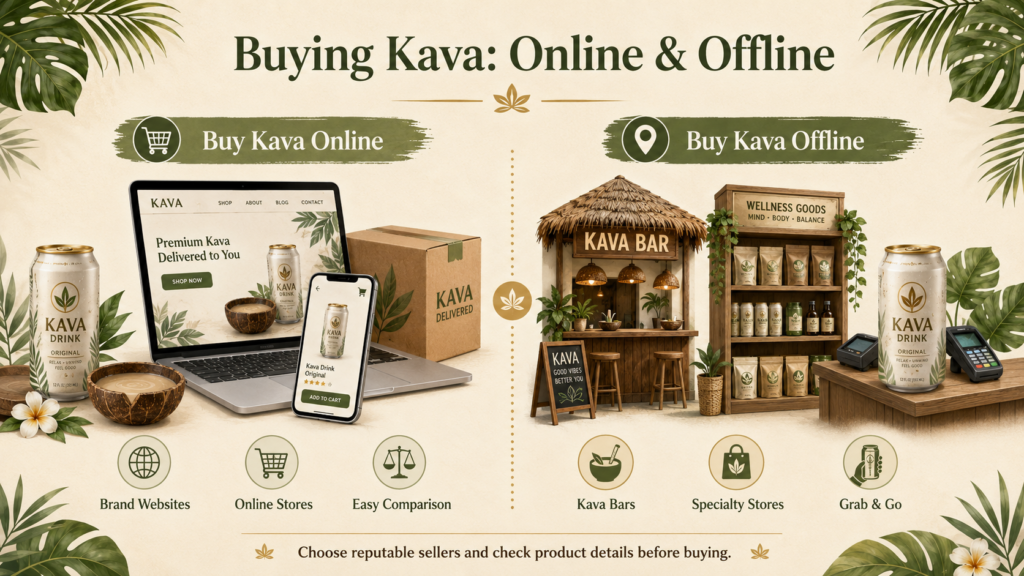
You can buy Kava drinks near you from Kava bars, smoke shops, gas stations, convenience stores, and some specialty wellness stores.
However, if you are a couch potato who doesn’t want to grab the car keys to find a perfect Kava store near you, buy them online from Kava stores or reputable brand websites.
Are Kava Drinks Legal?
Kava drinks are generally legal in many countries, including the United States.
- United States: Legal at the federal level, with availability through kava bars, retailers, and online stores. Some states or local areas may have additional restrictions.
- European Union & Germany: Regulations vary, with some restrictions historically placed on Kava supplements, while traditional Kava root products have seen different legal outcomes.
- Other Countries: Countries including the UK, Canada, France, Poland, and Switzerland have stricter regulations or restrictions on Kava products.
- Pacific Islands: Kava remains a traditional beverage with deep cultural significance and widespread use.
Note: Regulations can vary based on the country, state, product format, and how Kava is marketed. Always check local rules before purchasing or traveling with Kava products.
What Are The Best Kava Drink Brands In The USA?
The best Kava drink brands in the USA include:
- Mitra9
- Kratomade
- Leilo
- Botanical Brewing Co
- Tea Time
- Drink Vibes
- Kalm with Kava, to name a few.
FAQs About Kava Drinks
1. What Is Kava Root and Where Does It Come From?
Kava root comes from the Piper methysticum plant, a shrub native to the South Pacific. The root is traditionally processed into a drink that has been part of Pacific Island culture for generations.
2. How Are Kava Shots Different From Traditional Kava Drinks?
Kava shots are modern, concentrated beverage formats designed for convenience, while traditional Kava drinks are prepared by mixing ground root with water and straining the mixture.
3. What Ingredients Are Usually Added to Modern Kava Drinks?
Modern Kava beverages may include ingredients such as fruit flavors, herbs, carbonation, and other botanical extracts to create a more approachable taste compared with traditional Kava.
4. Why Does Kava Taste Bitter?
Kava’s earthy and slightly bitter taste comes from naturally occurring compounds in the root. Many modern beverages combine Kava with fruit flavors or other ingredients to create a smoother taste.
5. What Is the Difference Between Traditional Kava and Instant Kava?
Traditional Kava requires mixing and straining ground root, while instant Kava is processed into a powder that dissolves more easily in liquid.
6. Are Kava Drinks Considered Functional Beverages?
Yes, many modern Kava drinks are positioned within the functional beverage category because they use botanical ingredients and offer an alternative to traditional beverages.
7. What does a Kava drink do?
Kava drinks are commonly associated with a relaxed and calming experience. The compounds in Kava, known as kavalactones, have been studied for their interaction with the body.
8. Does Kava taste like alcohol?
No. Kava does not taste like alcohol. Traditional Kava has an earthy, herbal, and slightly peppery flavor, while modern versions often include fruit flavors.
9. Can you mix Kava with other drinks?
Yes, Kava is often combined with ingredients like coconut milk, fruit juices, herbs, and sparkling water to create different beverage recipes.
10. Why do people drink Kava?
People explore Kava for its cultural history, unique flavor, and place within the growing category of botanical and alcohol alternative beverages.
11. How long does a Kava drink last?
The experience from Kava can vary depending on factors such as the type of Kava, preparation method, and individual differences.
12. Is Kava the same as Kratom?
No. Kava and Kratom come from different plants, have different traditional origins, and contain different natural compounds.
13. Can Kava drinks be made at home?
Yes. Traditional Kava can be prepared by mixing ground Kava root with water and straining the mixture. Many people also create modern Kava recipes like mocktails and flavored drinks.
From Pacific Traditions to Modern Sips: The Story of Kava Continues
Kava has come a long way from its traditional roots in Pacific Island ceremonies to becoming part of a growing world of modern botanical beverages. Whether you are interested in the traditional preparation, curious about canned Kava drinks, or simply exploring alternatives to the usual social drinks, understanding where Kava comes from and how it is made gives you a much better appreciation of what is actually in your cup.
The world of Kava is much bigger than one type of drink. There are traditional grogs, instant options, Kava shots, sparkling beverages, and creative recipes that make this centuries-old drink feel at home in today’s beverage culture.
But the most interesting part of Kava is not just how it is prepared — it is how people continue to reinvent it while keeping its history alive.
So, whether you are walking into a Kava bar for the first time, opening your first can of a modern Kava beverage, or simply researching what all the curiosity is about, one question remains:
Could Kava become the next big chapter in the way we think about social drinking?
