
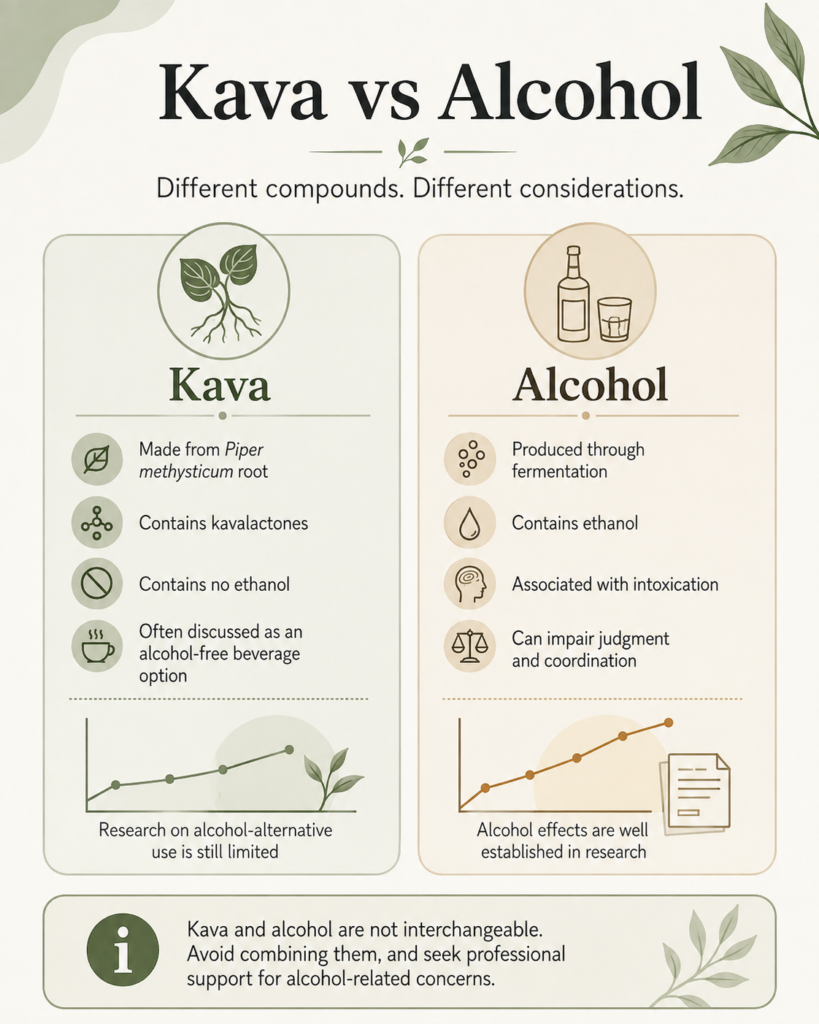
When comparing Kava vs alcohol, the main differences come down to their ingredients, active compounds, and how they are used. Kava is a traditional beverage made from the root of the Piper methysticum plant, while alcoholic drinks contain ethanol, the compound responsible for alcohol’s intoxicating effects.
A Kava drink vs alcohol comparison is not simply about deciding which beverage is “better.” These two drinks come from different sources and have different chemical compositions. Kava contains naturally occurring compounds called Kavalactones, while alcohol contains ethanol, which affects the central nervous system.
People often search for alcohol vs Kava comparisons when looking for information about alcohol alternatives or wanting to understand the differences between these beverages. While Kava does not contain alcohol and is used in traditional Pacific Island cultures, it is not considered a direct replacement for alcohol or a treatment for alcohol-related conditions.
This guide explores Kava vs alcohol effects, safety considerations, ingredients, research, and how these two beverages compare.
| Category | Kava | Alcohol |
| Source | Piper methysticum root | Fermented grains, fruits, or sugars |
| Active compounds | Kavalactones | Ethanol |
| Main biological targets | Multiple pathways including GABA-related signaling | Central nervous system depressant |
| Intoxicating compound | No ethanol | Ethanol |
| Legal status | Generally legal but varies by location | Legal age restrictions apply |
| Calories | Depends on preparation/product | Often calorie-containing |
| Social use | Traditional Pacific Island beverage | Global recreational beverage |
What Is Kava?
- Kava is a tropical evergreen shrub from the pepper family (Piperaceae), scientifically known as Piper methysticum.
- The plant is native to the Pacific Islands, where its roots have been traditionally used to prepare a cultural beverage.
- Kava drinks are made from the plant’s root or rhizome, which contains naturally occurring compounds called Kavalactones.
- Traditional Kava preparation involves extracting compounds from ground or crushed root material, usually with water.
- Today, Kava is available in various formats, including traditional beverages, instant preparations, capsules, and ready-to-drink products.
- Unlike alcoholic beverages, Kava does not contain ethanol or alcohol.
For a complete overview of Kava’s origins, preparation methods, different drink formats, and commonly discussed characteristics, explore our detailed Kava drinks guide.
What Is Alcohol?
- Alcohol refers to a group of chemical compounds, but in beverages, it usually refers to ethanol, the type of alcohol produced through fermentation.
- Alcoholic drinks are made by fermenting natural sugars from sources such as grains, fruits, or other plant materials.
- Common alcoholic beverages include beer, wine, and spirits, which contain different concentrations of ethanol.
- Ethanol is the primary compound responsible for alcohol’s intoxicating effects and its impact on the central nervous system.
- Alcohol consumption can affect areas such as coordination, reaction time, judgment, and other body functions.
- Unlike Kava, alcoholic beverages contain ethanol, which is measured as alcohol by volume (ABV) on product labels.
Alcohol has been used in cultural and social settings worldwide for thousands of years. However, its effects, risks, and long-term health considerations differ significantly from those associated with Kava.
Kava vs Alcohol: Main Differences
Although Kava and alcohol are often compared as beverage options, they are fundamentally different in their origins, active compounds, and how they interact with the body. The table below highlights the key differences between a Kava and alcohol:
| Comparison Factor | Kava | Alcohol |
| Source | Made from the root of the Piper methysticum shrub native to the Pacific Islands | Produced through fermentation of sugars from grains, fruits, or other plant sources |
| Primary active compounds | Kavalactones | Ethanol |
| Contains alcohol? | No, Kava does not contain ethanol | Yes, alcoholic beverages contain ethanol |
| Hangover | No | Yes |
| Traditional use | Used for centuries in Pacific Island cultural and ceremonial practices | Used worldwide in social, cultural, and recreational settings |
| Main compound researched | Kavalactones, a group of naturally occurring plant compounds | Ethanol, the compound responsible for alcohol’s effects |
| Beverage formats | Traditional preparations, instant mixes, extracts, and ready-to-drink products | Beer, wine, spirits, and other alcoholic beverages |
| Intoxication | Does not produce alcohol intoxication because it contains no ethanol | Can cause alcohol intoxication depending on ethanol intake and individual factors |
| Label information | Often focuses on Kava type, preparation method, and Kavalactone content | Typically lists alcohol by volume (ABV) percentage |
| Safety considerations | Product quality, preparation method, and individual factors are important considerations | Amount consumed, frequency, and individual health factors influence risks |
Kava vs Alchol Effects Comparison: How They Feel?
While both Kava and alcohol are often discussed in the context of social beverages, their effects come from different compounds. Kava contains Kavalactones, while alcohol contains ethanol, which produces alcohol intoxication. Individual experiences can vary depending on factors such as product type, amount consumed, body chemistry, and other substances involved.
| Effect | Kava | Alcohol |
| Main compound | Kavalactones | Ethanol |
| Mental effects | Associated with interactions with brain signaling pathways | Can affect mood, judgment, and decision-making |
| Coordination | Effects vary by product and individual response | Can impair balance, coordination, and reaction time |
| Cognitive effects | Different from alcohol because it contains no ethanol | Higher intake can affect speech, awareness, and memory |
| Physical sensations | Traditional preparations may cause mouth numbness or tingling | May cause physical effects linked to alcohol intoxication |
| Next-day effects | Vary depending on preparation and individual factors | Can contribute to hangover symptoms |
Is Kava a Good Alternative for Alcohol?
Kava is often discussed as an alcohol alternative, especially among people exploring alcohol-free beverage options. However, whether Kava is a suitable alternative depends on the individual, their goals, and their health circumstances. Current research does not establish Kava as a replacement treatment for alcohol dependence.
- Kava and alcohol are chemically different: Kava contains Kavalactones, while alcoholic beverages contain ethanol. This difference is why Kava is often compared with alcohol alternatives.
- Research on Kava as an alcohol substitute is still limited: According to Dr. Jarratt Pytell from the University of Colorado Anschutz Medical Campus, more controlled research is needed to determine whether Kava can provide meaningful benefits as an alcohol alternative.
- Kava and alcohol affect the body differently: While both may interact with similar brain pathways, alcohol is well-established to impair coordination, judgment, and cognitive function. Research on Kava’s effects on these areas remains less conclusive.
- Kava is not a treatment for alcohol dependence: Experts recommend that people dealing with alcohol-related concerns seek evidence-based medical support rather than relying on Kava as a replacement strategy.
- Avoid combining Kava and alcohol: Research discussions around Kava and alcohol caution that combining the two may increase impairment risks.
Why Some People Choose Kava Instead of Alcohol
Some people explore Kava as an alcohol-free beverage option because it offers a different experience from traditional alcoholic drinks. However, Kava and alcohol should not be viewed as interchangeable.
People may choose Kava because:
- Does not contain ethanol: Unlike alcoholic beverages, Kava does not contain alcohol and is made from the root of the Piper methysticum plant.
- Offers a different beverage experience: Kava contains Kavalactones rather than ethanol, creating a different chemical profile from alcoholic drinks.
- Fits alcohol-free lifestyles: Some people explore Kava during periods such as Dry January or when looking for alternatives to traditional alcoholic beverages.
- Has a long cultural history: Kava has been traditionally consumed in Pacific Island communities for centuries.
- No next-day grogginess: Unlike alcohol that gives you a hangover the next day, Kava causes no next-day regrets.
However, current research does not establish Kava as a direct replacement for alcohol or a treatment for alcohol-related conditions.
Can You Mix Kava & Alcohol?
Kava and alcohol are different substances, but combining them is generally discouraged because both may affect the central nervous system. While Kava contains Kavalactones and alcohol contains ethanol, using them together may increase the potential for unwanted effects.
- Both can affect the nervous system: Alcohol is a central nervous system depressant, while Kavalactones interact with multiple biological pathways, including GABA-related signaling.
- Combining them may increase impairment risks: Using Kava and alcohol together may increase effects such as drowsiness, reduced coordination, or impaired judgment.
- Research on the combination is limited: More studies are needed to fully understand how Kava and alcohol interact when used together.
What Research Says About Kava as an Alcohol Alternative?
Research on Kava as an alcohol alternative is still developing. While some studies have explored Kava’s active compounds and its potential role in areas related to substance use, there is currently not enough evidence to confirm Kava as a replacement for alcohol.
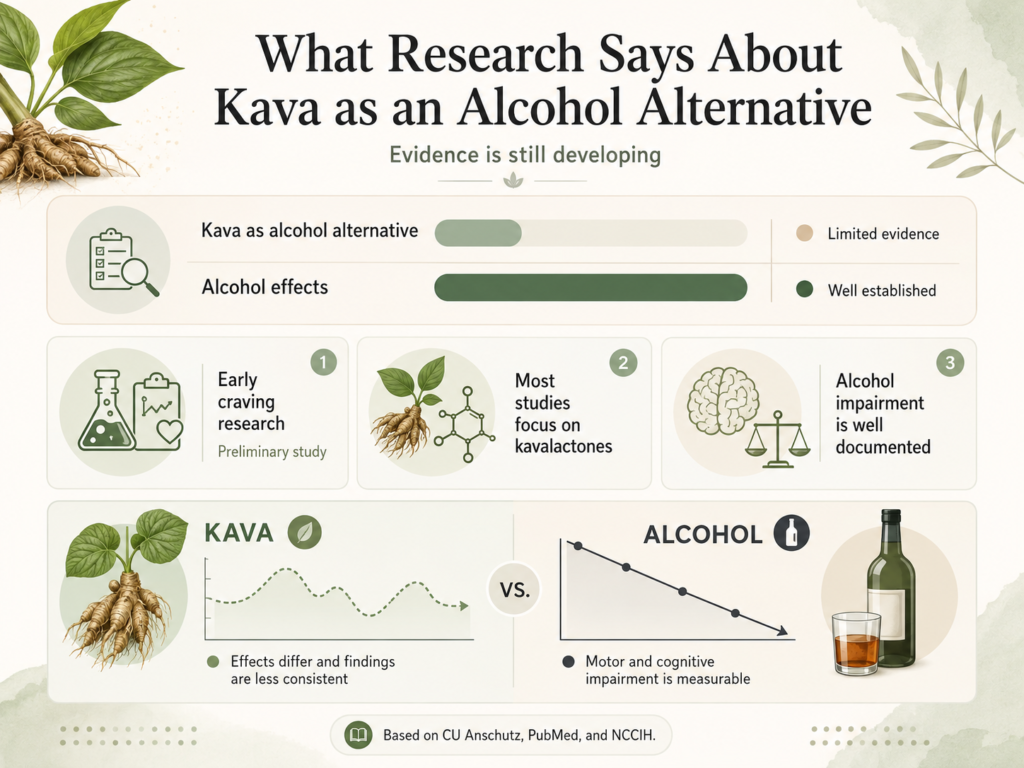
- Early research has explored Kava and alcohol cravings: A small preliminary study investigated whether Kava could influence cravings associated with substance use, including alcohol. Researchers noted potential findings but emphasized that the results were exploratory and require larger, controlled studies.
- Most Kava research has focused on other areas: Clinical studies have primarily examined Kava’s Kavalactones and their interaction with biological pathways, rather than whether Kava can replace alcohol. Research continues to evaluate Kava’s properties and safety profile.
- Kava and alcohol do not produce the same effects: Research comparing the two suggests that ethanol can produce measurable motor and cognitive impairment. In contrast, Kava’s effects are different and have shown less consistent findings in studies.
Researchers studying Kava’s role as an alcohol alternative note that more evidence is needed before concluding its effectiveness as a substitute for alcohol.
FAQs
Does Kava get you stoned/high?
No, Kava does not produce a cannabis-like high because it does not contain THC. Kava contains Kavalactones, which are different plant compounds from cannabinoids or ethanol.
Is Kava an opioid?
No, Kava is not an opioid; it is a psychoactive plant-based beverage and supplement made from the root of Piper methysticum. It works primarily by interacting with GABA receptors in the brain to produce calming and relaxing effects, rather than binding to opioid receptors.
Can you drink Kava and alcohol together?
No, you should never drink Kava and alcohol together due to severe risks of liver toxicity and profound central nervous system depression.
Does Kava cause a hangover?
No, Kava does not cause a traditional alcohol-style hangover (such as headaches, severe dehydration, or nausea). However, consuming very large amounts can sometimes lead to mild morning grogginess, tiredness, or a slight lack of motivation.
Is Kava addictive?
Kava is generally not considered physically addictive, though it can be habit-forming or lead to mild psychological dependence in some heavy users.
Does Kava contain alcohol?
No. Kava does not contain ethanol. It is made from the root of the Piper methysticum plant and contains naturally occurring Kavalactones.
How long do Kava’s effects last compared to alcohol?
Kava’s primary active effects last about 2 to 4 hours, which is shorter than a typical multi-hour alcohol session, though both substances linger in the body differently.
Does Kava show up on drug tests?
No, Kava does not show up on standard drug tests. Standard workplace or medical screenings (such as 5-panel or 12-panel tests) look only for specific illegal or controlled substances like THC, opioids, and amphetamines, and do not screen for Kava or its active Kavalactones.
Conclusion: Kava vs Alcohol: Understanding the Difference
Kava and alcohol are often compared because both are consumed as beverages in social settings, but they are fundamentally different. Kava is made from the root of the Piper methysticum plant and contains Kavalactones, while alcoholic drinks contain ethanol, the compound responsible for alcohol intoxication.
When comparing Kava vs alcohol effects, safety, and use, there is no simple answer that one is universally better. They have different ingredients, different research backgrounds, and different considerations. While some people explore Kava as an alcohol-free beverage option, current research does not support it as a direct replacement for alcohol or a treatment for alcohol-related conditions.
Understanding these differences can help you make informed choices about the beverages you include in your lifestyle.
Kava has a long history beyond modern beverage trends, but what exactly makes a Kava drink different from the traditional preparations used for centuries?