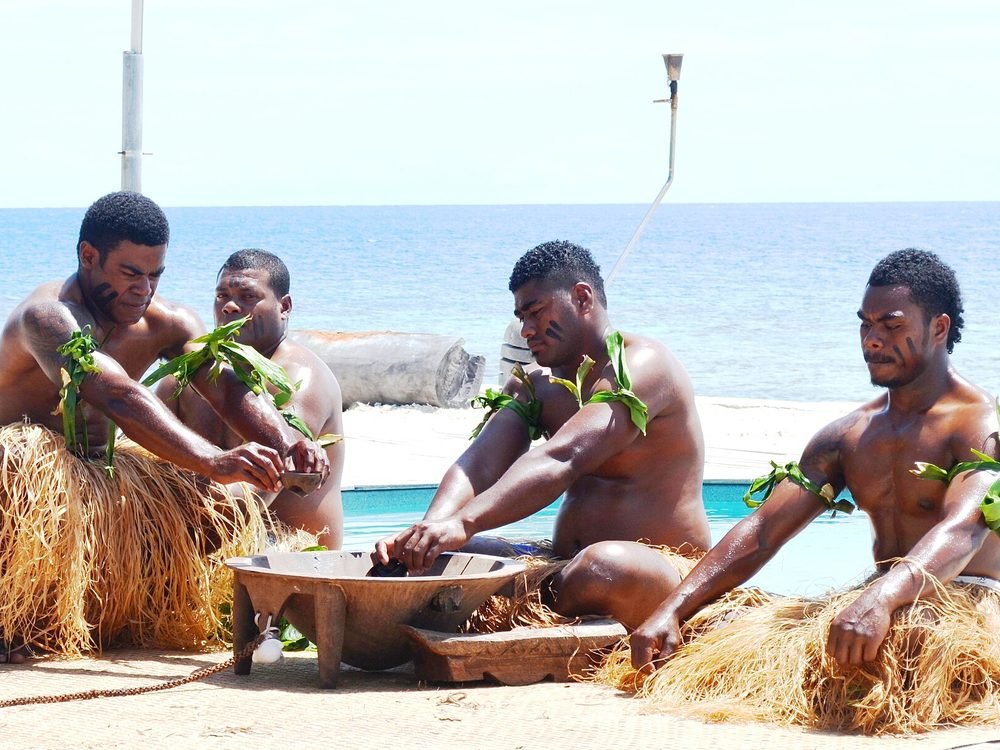
In Fiji kava is known as yaqona, or affectionately as grog, and it sits at the very heart of hospitality and ceremony. Almost no important occasion — a wedding, a welcome, a village meeting, an apology — takes place without a bowl being mixed and shared.
Sevusevu and the tanoa
A visitor to a Fijian village performs sevusevu: presenting a bundle of dried kava root to the headman as a gift and a request to be received. Once the sevusevu is accepted, the visitor is treated as part of the community. The prepared drink is mixed in a wide, low wooden bowl called a tanoa and served round to each person in a bilo, a cup made from half a coconut shell.
The nakamal
In Vanuatu the evening gathers around the nakamal — traditionally the village meeting house, and today also the name for the small kava bars found on nearly every street. As the sun sets, people drift in to drink, talk quietly, share news and settle matters of the community. The nakamal is part social club, part council chamber and part place of rest.
One drink, many names
Across the islands the same plant carries many beloved names — ʻawa in Hawaiʻi, ʻava in Samoa, sakau in Pohnpei, malok in Vanuatu — each with its own ceremony and etiquette. Everywhere, though, it means the same things at heart: peace, welcome and community. Today that spirit has travelled: kava bars now offer a relaxed, alcohol-free place to socialise far beyond the Pacific.
Last modified: July 14, 2026