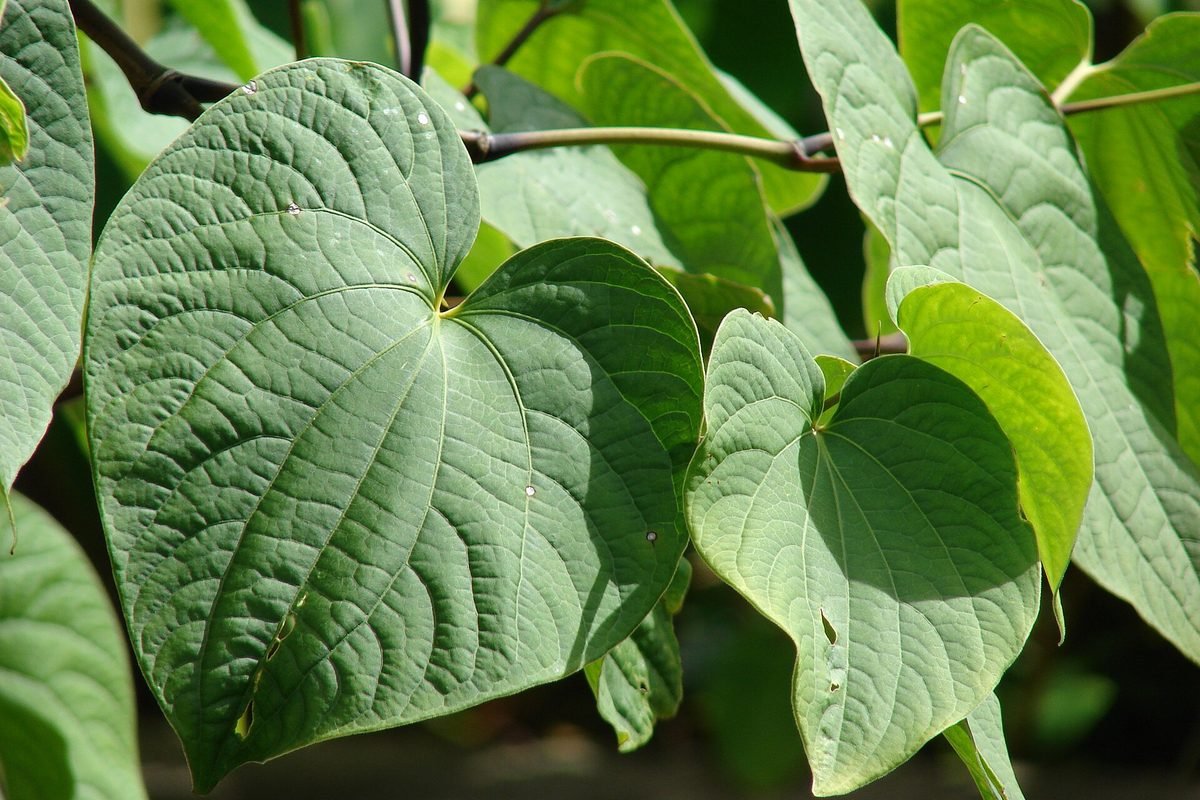
Kava (Piper methysticum) is a member of the Piperaceae — the pepper family, a large group of some 3,600 species found mostly in the warm tropics. Within it kava belongs to the genus Piper, the true peppers. Its closest household cousins are familiar: black pepper, whose dried berries season food worldwide, and New Zealand’s kawakawa, a shrub long used by Māori.
Power in the root
The plant grows as a leafy shrub two to three metres tall, but its real business is underground. A thick basal rootstock, together with a mass of lateral roots, is where the plant concentrates its kavalactones — the compounds responsible for its character. In a mature plant this underground system can be far larger and heavier than the shrub visible above it.
A sterile clone
Kava is functionally sterile: it no longer produces viable seed, so it is grown only from stem cuttings. Every plant is therefore a clone, and a grower’s stock is a living line passed down and shared. That long partnership between people and plant has produced hundreds of named cultivars; Vanuatu alone recognises well over a hundred, each with its own leaf colour, stem pattern, and character in the cup.
Noble versus tudei
Growers draw a crucial distinction between noble cultivars — smooth, well suited to daily and social use, with a good safety record — and tudei (“two-day”) kava, which is stronger, longer-lasting, and reserved for special rather than casual use. The difference matters commercially and legally: Vanuatu permits only noble kava for export.
Botany Cultivars Piper methysticum
Last modified: July 14, 2026